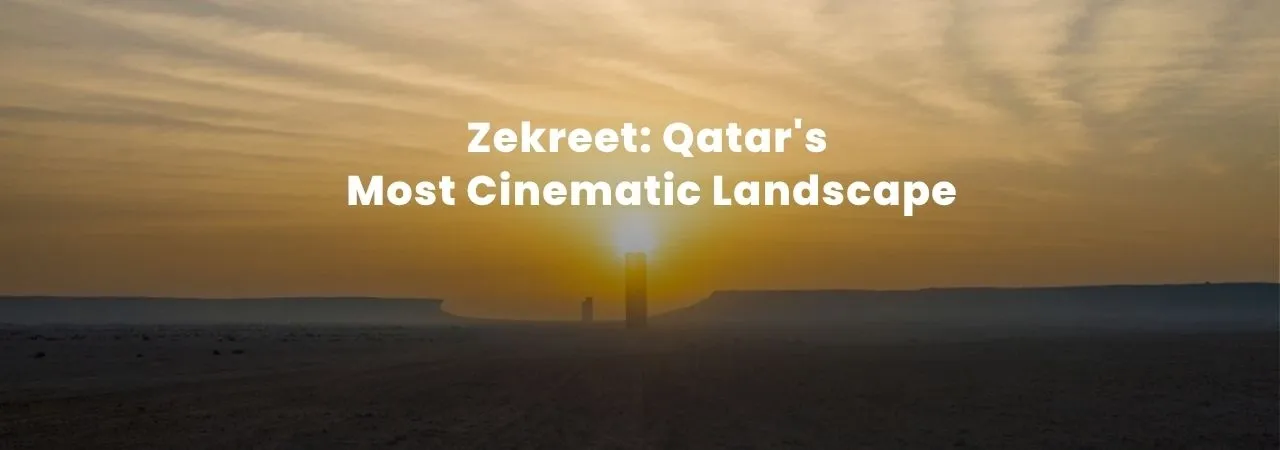
There's a stretch of Qatar's west coast that doesn't look entirely real. The rock formations rise from flat desert in shapes that seem sculpted rather than natural. A replica village sits among them, silent and dramatic between film shoots. And somewhere in the distance, four monumental steel slabs stand in a ruler-straight line across the wilderness, pointing nowhere and everywhere at once.
Welcome to Zekreet - roughly 90 kilometres from Doha, and a world away from it in every other sense.
Rocks That Shouldn't Look This Good
The main event at Zekreet is the limestone escarpment - a series of extraordinary formations created over millennia by strong winds stripping away softer sedimentary rock and leaving the harder limestone exposed underneath. The result is a collection of mushroom-shaped cliffs and chalk-white outcrops that rise dramatically from the desert floor, casting long shadows in the early morning and glowing amber as the sun drops.
They have an otherworldly quality that photographs genuinely struggle to capture. Standing amongst them, you get the persistent, slightly disorienting feeling that you've wandered onto a film set - which, as it turns out, is not entirely inaccurate.
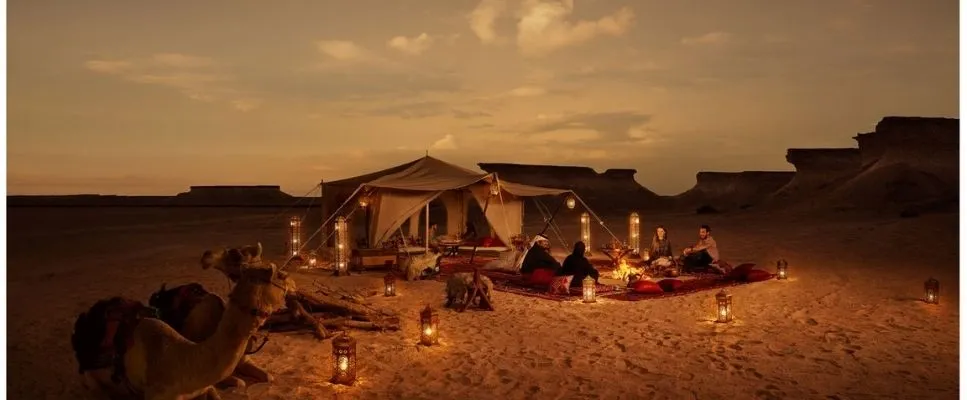
The whole area is a UNESCO Biosphere Reserve, which gives you a sense of just how significant this landscape is. It supports water sources, grazing grounds, and camel farming, and has a working ecosystem that predates any human interest in visiting it.
The Film City
Built as a replica of a traditional Arabic village, Film City near Zekreet was constructed specifically as a backdrop for movie and television productions, and it remains in use for exactly that purpose today. Between shoots, it sits quietly in the desert, its stone archways and narrow lanes empty, its walls catching the light in the way that cinematographers apparently travel considerable distances to find. Visiting between productions means you have it more or less to yourself: a complete village with no residents, no commerce, and no context beyond the dramatic landscape around it. It's the kind of place that prompts questions rather than answers. Who filmed here? What stories were told against these walls? And why does it feel so completely at home in the middle of the Qatari desert? The effect is cinematic in every sense of the word - which is, of course, rather the point.
Art in the Middle of Nowhere
Here is the detail that surprises almost everyone who visits Zekreet: it is also home to one of the most remarkable large-scale art installations anywhere in the world.
Richard Serra's East-West/West-East consists of four monumental steel plates - each several metres tall - installed in a precise line across the Brouq Nature Reserve, aligned with true north and south. They emerge from the desert floor at intervals with no plinth, no signage, no surrounding infrastructure. Just steel and sky and silence.
Serra chose this location deliberately. Because the desert floor is uneven, your relationship to the height of each plate shifts as you walk between them: sometimes towering overhead, sometimes appearing almost modest. It is a work about perception, landscape, and scale, and it functions entirely differently in person than in any photograph you'll have seen of it. It is also, depending on your point of view, either completely out of place or absolutely perfect where it is. Either way, it demands to be stood in front of.
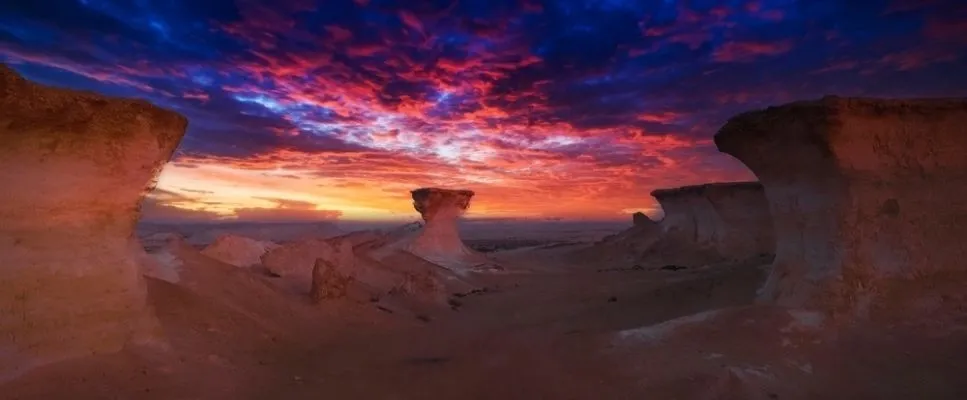
Stunning desert rock formations in Qatar
The Wildlife That Wanders In
Zekreet is not a manicured nature reserve. The oryx and gazelles that roam the area do so freely, appearing and disappearing across the limestone landscape on their own schedules and with no particular regard for visitors. There are no feeding times, no fences, no viewing platforms. You either encounter them or you don't — and when you do, the effect is arresting.
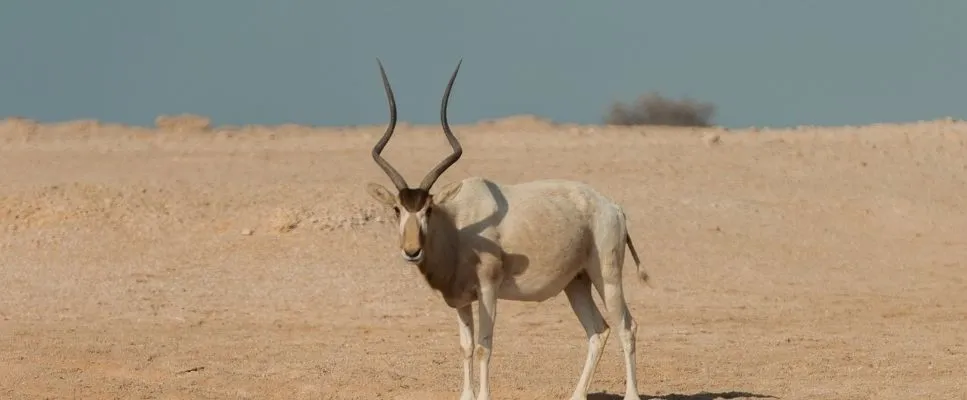
Oryx, the national animal of Qatar, in the desert of Zekreet
Between roughly October and March, flamingos are also drawn to the area, gathering in the shallower flats in clusters of soft pink that make absolutely no visual sense against the white limestone and pale desert, yet somehow look entirely right. They are not guaranteed, but they are one of those wildlife encounters that, if it happens, becomes the story you tell when you get home.
How to Make a Day of It
Zekreet works beautifully as a full day out from Doha. Start early for the best light on the rock formations - the low morning sun on those chalk-white limestone faces is extraordinary - then move to Film City as the day opens up, walk the Serra installation, and give yourself time to simply wander the wider landscape and see what crosses your path.
Pack your own food and plenty of water. There are no facilities in the reserve, and that is precisely part of its appeal. You'll need a 4WD for the tracks leading into the reserve itself, though the main road to Zekreet is paved. Pair it with a stop at Al Zubara Fort on the way back for one of the most unexpectedly rich day trips Qatar has to offer.
The Qatar Nobody Flies Past
Zekreet is for the traveller who wants to go a little further than the itinerary suggests. Who sees "limestone formations, 90km from Doha" and thinks yes, exactly rather than maybe next time. The reward is a landscape that is genuinely unlike anything else in the country - ancient rock, cinematic architecture, world-class public art, and wildlife that wanders through all of it completely unbothered.
Ready to go off-script? #musafirdotcom plans the roads less travelled - including every detail of a Zekreet day trip that goes exactly right. Plan your Qatar journey at qa.musafir.com/go-qatar