Ask most visitors what Qatar was before the oil, and you'll get a pause. The gleaming towers of Doha, the Formula One circuit, the cultural institutions built to rival any in the world - they project such complete confidence about the present that the past can feel almost beside the point.
But drive North for a little over an hour, past the point where most people turn back, and Qatar reveals an entirely different story. One built not on petroleum, but on pearls.
A Town That Once Meant Something
In the eighteenth and nineteenth centuries, Al Zubarah was one of the most prosperous settlements in the Arabian Gulf. Its location on Qatar's northwestern coast made it a natural hub for pearl fishing and maritime trade, and at its peak, the town was home to thousands of residents - merchants, divers, craftsmen, and traders from across the region. The pearl trade was extraordinary in its own right: divers would descend without equipment into the warm Gulf waters, holding their breath for up to two minutes, surfacing with oysters that might - or might not - contain the gems that drove an entire regional economy. It was dangerous, skilled, and completely central to Qatari identity for generations.

Then, in the early twentieth century, two things happened in quick succession: Japanese cultured pearls flooded the market and made natural pearls economically unviable, and oil was discovered beneath the desert floor. Al Zubarah, unable to survive on trade alone, was gradually abandoned. The buildings fell to the wind and the sand. What remains today is one of the most significant archaeological sites in the entire Gulf region, and since 2013, a UNESCO World Heritage Site.
The Fort Itself
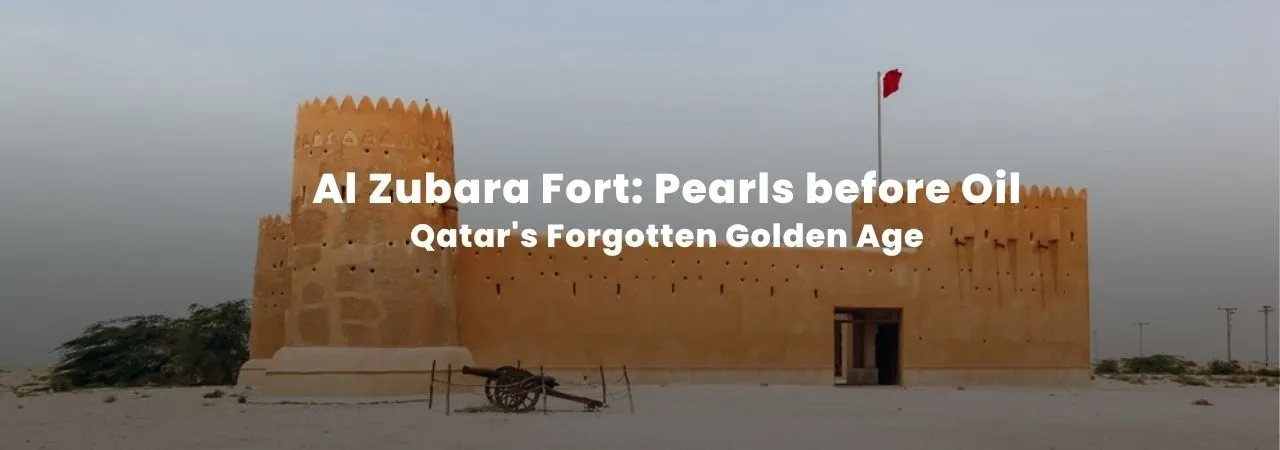
Al Zubara Fort stands at the edge of the archaeological site — a square, sand-coloured structure with round corner towers, built in 1938 by the Qatari government to serve as a military outpost and police station. It is compact, photogenic, and surprisingly well-preserved, the kind of building that looks exactly as a fort in the desert should look.
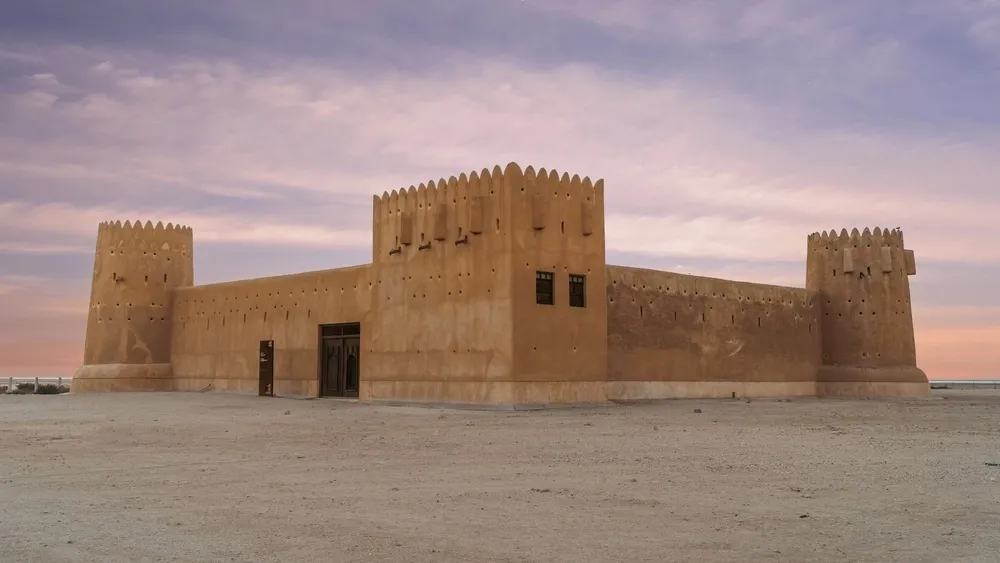
Inside, it now functions as a small museum, housing artefacts excavated from the surrounding site: pearl diving equipment, ceramics, trade goods, and fragments of daily life from a town that disappeared quietly and completely. The exhibits are modest in scale but rich in context, and the staff are genuinely knowledgeable if you take the time to ask.
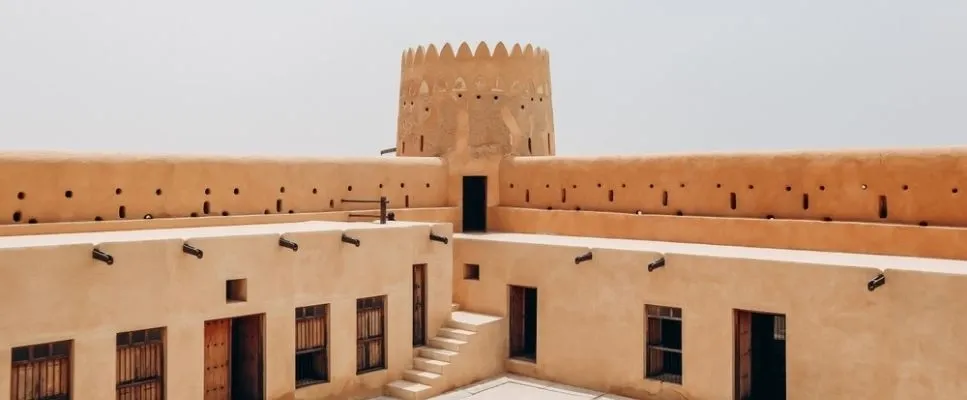
Standing on the fort's rooftop and looking out over the flat expanse of the old town - the outlines of buildings still visible beneath the surface, the Gulf glinting in the distance - you get a sense of scale that the museum interior alone can't give you.
The Archaeological Town: Walking Through a Lost World
The ruins of Al Zubarah extend considerably beyond the fort itself. The old town covers an area of roughly sixty hectares, and much of it remains un-excavated; a deliberate decision that allows future generations of archaeologists to work with better tools and techniques than exist today.
What has been uncovered is remarkable: the remains of a canal system, mosques, merchant houses, defensive walls, and a coastal watch tower. The site is carefully managed, with boardwalks and interpretation panels guiding visitors through the ruins without disturbing the ground.
Walking the site in the late afternoon, with the light dropping low and the shadows stretching across the outlines of the old streets, is one of those travel experiences that is difficult to articulate but easy to remember. You are walking through a town that was once full of sound and commerce and ambition, now returned entirely to silence.
The Drive North as Part of the Experience
Al Zubara is roughly 105 kilometres from Doha - about an hour and a quarter on a well-maintained road. The drive north takes you through a side of Qatar that is rarely photographed: flat, sparsely populated, occasionally dotted with camels and the low silhouettes of desert shrubs. It is not dramatic scenery, but it has a particular quality of openness that the south of the country doesn't.
There's also a practical reason to appreciate the journey: by the time you arrive, you've left Doha far enough behind that the site receives the quiet it deserves. Unlike UNESCO sites that struggle under the weight of mass tourism, Al Zubara is visited at a pace that feels appropriate.
Combine it with a stop at Zekreet on the way back for a full day that spans Qatar's cultural heritage and its extraordinary natural landscape in one clean loop.
What to Know Before You Go
Al Zubara Fort and the archaeological site are open to visitors throughout the week, though it's worth checking current opening hours before you travel. The best time to visit is between October and March, when the temperature makes an outdoor site genuinely comfortable. Morning visits are ideal for photography - the light on the fort and the ruins is at its most flattering before midday.
There is a small café on site, but bringing your own water is always sensible for a trip this far north. And allow more time than you think you'll need. The site rewards a slow walk rather than a quick survey, and most visitors who rush it leave wishing they hadn't.
The Qatar Nobody Flies Past
Al Zubara is for the traveller who wants to understand a place, not just see it. Who asks what came before the skyline, and is willing to drive an hour to find out. The answer, it turns out, is a town built on something as fragile and beautiful as a pearl - and a story that Qatar is only now beginning to tell the world properly.
Your deeper Qatar experience starts here. Let #musafirdotcom put together the kind of trip that goes beyond the obvious. Plan your Qatar journey at qa.musafir.com/go-qatar